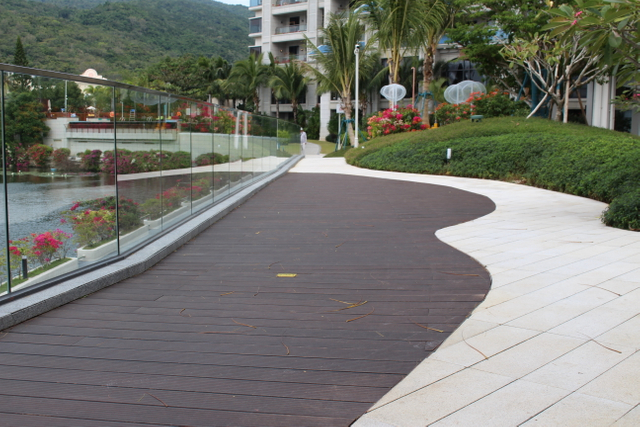
WPC composite decking walkway installed beside a swimming pool at a resort
Deck Owner's Guide

WPC Composite Decking Maintenance & Care Guide

SENYU wood-plastic composite decking is engineered to stay beautiful for decades with minimal upkeep. Here is everything you need to know about keeping your deck in top condition — from fixing color variation to removing stains, mildew and rust marks.

Why care matters

Low Maintenance — Not Zero Maintenance

One of the biggest advantages of WPC (Wood-Plastic Composite) decking over traditional timber is that it never needs sanding, staining, painting or sealing. There is no rot to worry about and no annual repainting cycle.

That said, "low maintenance" is not the same as "no maintenance". A simple routine — occasional cleaning with soapy water, keeping drainage gaps clear, and dealing with spills promptly — will keep your SENYU deck looking like new for 20–25 years or more.

This guide covers the six most common issues deck owners encounter, what causes them, and exactly how to solve each one.

Hollow WPC composite decking board with 3D embossed wood grain and drainage channels
Hollow-core WPC decking board — the hollow channels and side grooves are what keep water draining and air moving.
No sanding or sealingZero annual refinishing work
Wash 2–4× a yearSoapy water is all you need
Colour evens outNatural weathering in 2–3 months
20–25+ yearsWith basic routine care
Troubleshooting

6 Common Decking Issues & How to Fix Them

Most composite decking problems are easy to solve once you know the cause. Find your issue below — each card shows the typical cause on the left and the recommended solution on the right.

01Color Variation After Installation

Cause

This is to be expected prior to natural weathering. Freshly installed boards have not yet been evenly exposed to sunlight and rain, so slight shade differences between boards are normal.

Solution

Nothing to do — simply wait. Once the material has been exposed to the elements for a few months, the color will even out naturally across the entire deck surface.

02Color Variation After Weathering

Cause

Darker areas have been exposed to less weathering — typically under furniture, planters or in permanently shaded spots where rain and sun never reach the surface evenly.

Solution

Wet the darker areas with water to accelerate the weathering effect. If an area suffers from constant shade, use a proprietary deck cleaner (treat it as a heavily soiled area) to speed up the process.

03Warped Boards

Cause

An uneven support structure, inadequate gapping, poor ventilation, or debris clogging the gaps between boards — all of which block water drainage and airflow.

Solution

Drainage slots may need to be cut into inadequately spaced boards. Install adequate ventilation gaps during installation. For clogged gaps, use a flat tool to remove the debris regularly.

04Oil & Grease Stains

Cause

Oil stains from barbecues, cooking splashes, salad oil, sunscreen and dropped food. The longer they sit, the more they set into the surface.

Solution

Remove oil and grease stains with a household or automotive degreasing product as soon as possible, then rinse thoroughly with clean water. Speed is the key.

05Mildew

Cause

Mildew can appear in poorly drained or heavily shaded areas, and underneath deck furniture or planters where moisture lingers on the surface.

Solution

Clean affected areas with a dedicated mould & mildew cleaner, then rinse. Improve drainage and airflow around the deck, and move furniture occasionally to let surfaces dry out.

06Rust Marks

Cause

Low-quality fasteners, or ferrous objects such as steel garden furniture, metal plant pots and tools left standing on the deck, leaving rust transfer marks.

Solution

Use a soft brush or sponge on the marks with soapy water. Replace low-quality fasteners with high-quality stainless steel or coated screws, and avoid leaving ferrous metal objects on the deck.

In the Field

See the Product in Real Installations

These are actual SENYU WPC installations — balconies, pool surrounds, terraces, gardens, parks and commercial plazas. Every one of them is maintained with nothing more than soap, water and a soft brush.

Prevention First

Routine Care Keeps Your Deck Like New

Prevention is far easier than repair. Build these three simple habits into your seasonal routine and most issues above will never appear.

Wash Regularly

Sweep off leaves and dirt, then wash with warm water and mild soap 2–4 times a year. Rinse thoroughly. Regular washing prevents mildew and keeps the surface even in color.

Keep Gaps Clear

Check the drainage and expansion gaps between boards each spring and autumn. Remove trapped leaves, twigs and debris with a flat tool so water drains and air circulates freely.

Act Fast on Spills

Clean up BBQ grease, oil, wine and food spills as soon as they happen. Fresh stains wipe away in seconds; set-in stains may need a degreaser and more scrubbing.

Quick Reference

Do's & Don'ts for Composite Decking

Print this out, stick it in the garden shed — these simple rules cover 95% of what your deck will ever need.

Do

  • Sweep and wash the deck a few times per year
  • Use mild soap and water for general cleaning
  • Clean spills promptly, especially oil and grease
  • Use stainless steel or coated fasteners
  • Ensure good ventilation and drainage under the deck

Don't

  • Don't use chlorine bleach or harsh solvents
  • Don't sand, paint or stain composite boards
  • Don't pressure-wash above 1,500 PSI / too close
  • Don't place fire pits or BBQs directly on the deck
  • Don't leave metal objects sitting on the surface
FAQ

Frequently Asked Questions

The questions our customers ask most about WPC decking care. For installation questions, see our installation instructions.

Does composite decking require a lot of maintenance?
No. WPC composite decking is low-maintenance compared with timber. There is no need for sanding, staining or sealing. A routine wash with soapy water a few times per year is usually enough to keep the deck in good condition.
Why is my new composite deck showing color variation?
Color variation right after installation is normal. WPC boards undergo natural weathering during the first few months of sun and rain exposure, after which the color evens out across the whole surface. No action is needed.
Can I use a pressure washer on composite decking?
Yes, but with care. Keep the pressure below 1,500 PSI (about 100 bar), use a fan-tip nozzle, and spray at a 25–30 cm distance along the direction of the boards. Excessive pressure or spraying across the grain can damage the surface.
How do I remove oil and grease stains from WPC decking?
Remove oil, grease and food stains as soon as possible with a household or automotive degreasing product, then rinse with clean water. The faster you act, the less chance the stain has to set into the surface.
How long does WPC composite decking last?
With correct installation and basic routine care, high-quality WPC decking typically lasts 20–25 years or more, with strong resistance to rot, insects, UV radiation and moisture.
Outdoor restaurant terrace finished with WPC composite decking

Need Expert Advice or Samples?

SENYU manufactures premium WPC decking, siding and fencing, exported to 65+ countries. Our technical team offers free support from shipment to installation — 7×24h online.

Quick Links

Products

Contact Us

  Industrial Concentration Zone, Yangshou Town, Yangzhou City,Jiangsu Province, China
  +86-18752749508
Inquiry
Copyright © 2023 Jiangsu Senyu New Material Co., Ltd . All Rights Reserved. Supported by leadong.com  |  Sitemap