
Views: 0 Author: Site Editor Publish Time: 2025-12-22 Origin: Site
Round Composite Decking Installation transforms outdoor spaces with smooth, elegant curves. Why settle for ordinary straight decks? Curved designs blend naturally with gardens and focal points like trees or fire pits. In this post, you’ll learn how to plan, design, and install stunning round composite decks that combine beauty with durability.
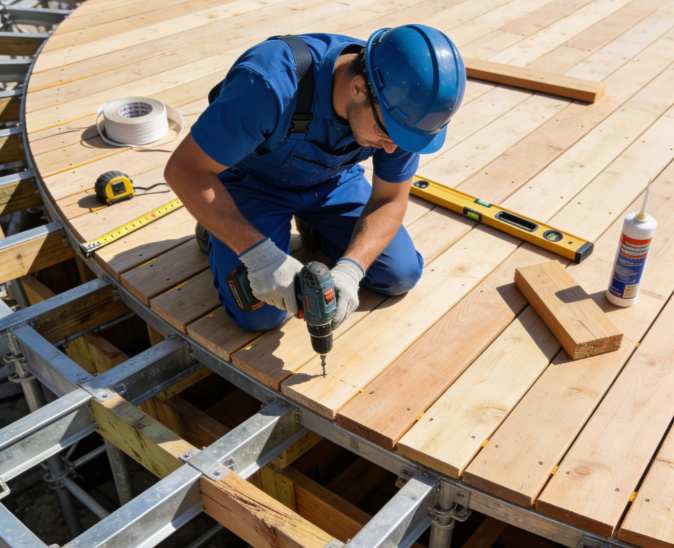
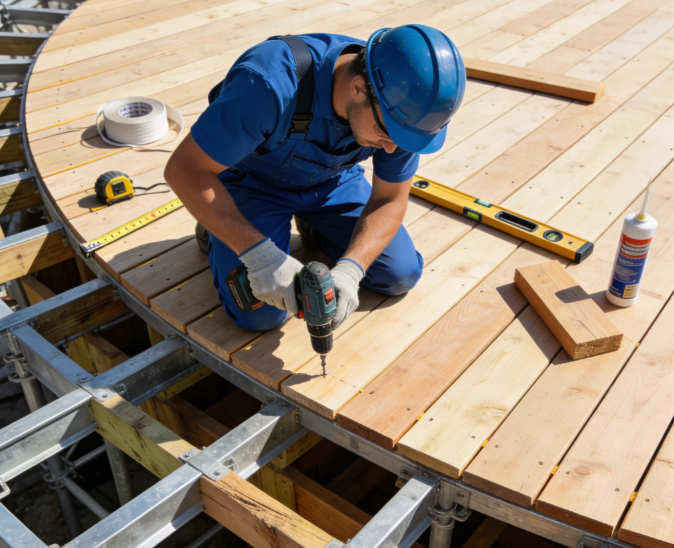
Round composite decking offers unique benefits that enhance outdoor spaces in ways straight decks cannot. Its curved lines soften garden and architectural edges, creating a more inviting, natural flow. This design approach breaks up harsh angles, blending the deck harmoniously with surrounding plants, pathways, and structures.
One of the biggest advantages is how round decking highlights focal points like trees, fire pits, and water features. Instead of forcing these elements into rigid layouts, curves embrace them, making these features stand out as natural centers of attention. For example, a circular deck around a mature tree allows people to gather comfortably without disturbing the roots or trunk, while visually framing the tree as a stunning centerpiece.
Curved decks also visually expand small outdoor areas. The flowing lines lead the eye along gentle arcs, making spaces feel larger and more open. This illusion works well in compact gardens or urban patios, where maximizing perceived space is key. The smooth transitions of a round deck invite movement and exploration, rather than confining users to boxy zones.
Durability and low maintenance are other major benefits of using composite materials for curved decks. Unlike wood, composite decking resists rot, warping, and insect damage, even in challenging climates. Its weather-resistant surface stays vibrant and slip-resistant over time, reducing upkeep needs. Curved composite decks maintain their shape and strength without cracking or splitting, ensuring long-lasting beauty and safety.
In summary, round composite decking combines aesthetic appeal with practical advantages. It softens hard lines, enhances natural focal points, visually enlarges small spaces, and delivers superior durability. These qualities make it an excellent choice for homeowners and designers seeking a stylish, low-maintenance curved deck solution.
Tip: When planning curved composite decks, prioritize focal points like trees or fire pits to maximize the design’s natural flow and visual impact.
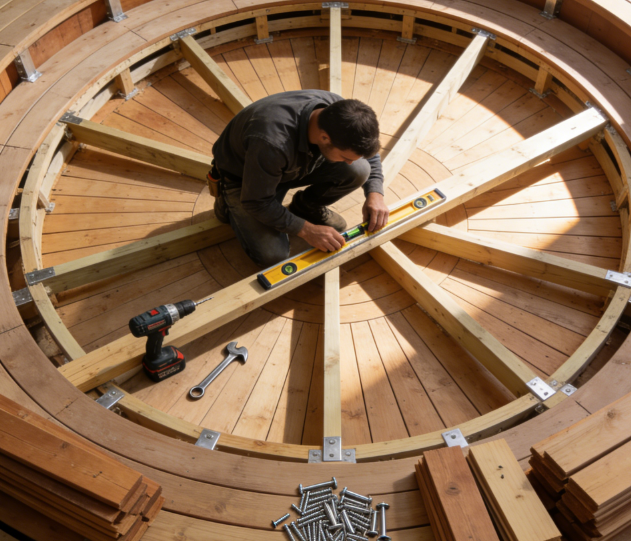
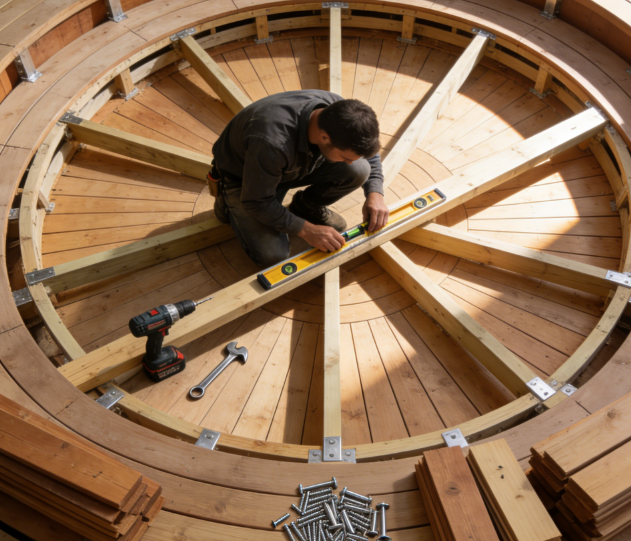
When planning a curved composite deck, several key factors shape the project’s success. Start by assessing the existing landscape and any planned features. Curved decks work best when they complement natural elements like trees, garden beds, or water features. For instance, a deck wrapping around a tree or a fire pit can create a harmonious flow. Understanding the terrain, slopes, and access points helps define the deck’s shape and size.
Next, check local building codes and permit requirements. Curved decks often require detailed plans for approval, especially if railings or stairs are involved. Regulations may specify load capacities, railing heights, and stair dimensions. Early compliance avoids costly delays or redesigns.
Designing the substructure for a curved deck differs from straight decks. Joists and beams must follow the curve, often requiring custom cuts and additional bracing. The subframe must support overhangs and maintain structural integrity along the arc. Using flexible materials or layered plywood for rim joists can help achieve smooth curves. Precise measurements and templates ensure the framework matches the decking shape.
Estimate the installation timeframe carefully. Curved decks usually take longer than linear ones due to complex cuts and fitting. Expect extra labor for shaping joists and installing curved fascia. Material waste is also higher because boards need trimming to fit the curve. Planning for this helps avoid surprises during construction.
Budget considerations are important. Curved decks typically cost more than straight decks because of added labor, specialized materials, and extra waste. Composite materials may be pricier upfront but offer long-term savings through durability and low maintenance. Comparing quotes from contractors experienced in curved decking can provide realistic cost expectations.
In summary, successful curved deck design balances aesthetics, structural integrity, and budget. Careful site assessment, code compliance, thoughtful substructure design, and realistic time and cost estimates set the foundation for a stunning round composite deck.
Tip: Always consult local building codes early and work with contractors experienced in curved decks to ensure your design meets safety standards and avoids costly revisions.
Start by laying the joists, which form the deck’s structural foundation. For curved decks, joists must follow the desired arc precisely. Use flexible materials or carefully cut lumber to shape joists along the curve. Keep joists as close to perpendicular to the decking boards as possible. This ensures strong support and proper alignment. Joist spacing might need adjustment depending on the decking board angle, especially if boards are laid diagonally up to 45°. Measure carefully and mark curves on joists before cutting.
After placing curved joists, brace the gaps between them using straight lumber cut at angles. These braces stabilize the substructure and prevent joists from shifting. Angle cuts allow braces to follow the curve smoothly. Plastic lumber, such as Manticore, offers durability and resistance to moisture, making it an excellent choice for bracing. Secure braces tightly to joists to maintain structural integrity, especially along the curved edges where forces concentrate.
Composite decking boards are rigid but can be cut precisely to fit curves. Use a circular saw to trim boards along the curved outline. Start installing boards from the outer edge, moving inward to maintain an even curve. Attach boards perpendicular to joists using countersunk screws to avoid surface damage. For tighter curves, cut boards into shorter segments and stagger joints for a smooth appearance. Regularly check alignment and adjust as needed to keep the curve consistent.
Finish the deck edges with composite fascia boards, which are thinner and flexible enough to bend around curves. Gently bend fascia along the curve, securing it to joist ends using countersunk screws. This step often requires two people—one to hold fascia in place, another to fasten screws. Avoid attaching fascia to braces; always fix it directly to joists for stability. Heating fascia to soften it is possible but not recommended due to risk of damage and need for special equipment.
Curved decks often include rounded stairs and railings for a cohesive look. Plan stair stringers and railing posts during substructure design. Posts may extend through decking for secure attachment. Use flexible railing materials or custom bends to follow deck curves. Install stair treads with consistent rise and run, cutting boards at angles or curves as needed. Ensure handrails meet local building codes for safety.
Tip: Use detailed templates or flexible measuring tapes to mark curves on joists and decking boards accurately before cutting, reducing material waste and ensuring a smooth finish.
For round composite decking, choose boards designed for durability and flexibility. Many composite brands offer boards with consistent thickness and smooth edges, making cutting and shaping easier. Fascia boards should be thinner and more flexible than standard decking to bend smoothly around curves without cracking. Popular composite fascia options include PVC-based or polymer-enhanced materials, which resist weathering and maintain their shape. Selecting fascia that matches decking color ensures a seamless, polished look.
The substructure must support the curved decking shape securely. Use quality lumber or plastic lumber for joists and braces. Plastic lumber, such as Manticore, offers excellent moisture resistance and durability, ideal for bracing between joists on curved decks. Joists should be cut or shaped to follow the curve precisely. For rim joists forming the deck’s outer edge, consider layering thin, weather-resistant plywood sheets laminated to create a flexible, strong curved frame. This method helps maintain the deck’s structural integrity while matching the rounded design.
Accurate cutting tools are crucial. Use a circular saw with a fine-tooth blade for smooth cuts on composite boards. A jigsaw can help with intricate curves or tight radius cuts. Cordless drills with countersink bits let you fasten boards flush, preventing surface damage. Countersunk screws designed for composite materials ensure secure fixing and reduce splitting. Measuring tools like flexible curve rulers or contour gauges assist in marking precise curves on boards and joists before cutting.
Composite decking is less flexible than wood, so bending requires careful planning. Instead of bending entire boards, cut them into shorter segments and install them in a curved pattern for smoother arcs. Avoid heating composite fascia to bend it, as this risks damage and requires specialist equipment. Instead, gently bend fascia boards by hand or use thinner fascia designed for flexibility. When cutting, always support boards firmly to prevent chipping. Use slow, steady blade speeds and sharp blades to achieve clean edges.
Tip: Always pre-measure and mark curves on decking boards and substructure components using flexible measuring tools to minimize material waste and ensure a precise fit on your curved deck.
When installing curved composite decks, durability and longevity depend on several critical factors. Choosing high-quality composite materials is the first step. Look for decking boards made from premium composites that resist fading, staining, and scratching. These materials often include UV inhibitors and are engineered to withstand harsh weather conditions without warping or cracking. Brands that offer extended warranties typically signal confidence in their product’s durability.
The substructure supporting the curved deck must be weather-resistant and strong. Use treated lumber, metal, or plastic lumber designed to resist moisture and rot. Plastic lumber braces, for example, are excellent for curved decks because they maintain shape and resist decay even in wet environments. Properly designed subframes prevent sagging or shifting that could damage the decking surface over time.
Fastening techniques are also vital. Use corrosion-resistant screws or hidden fasteners specifically designed for composite decking. Countersink screws to avoid surface damage and ensure boards sit flush. Over-tightening can cause boards to crack, while under-tightening risks loose boards and structural instability. When fastening curved boards, place screws near joists and avoid fastening into braces to maintain integrity.
Maintenance helps extend the life of curved composite decks. Regularly clean the surface with mild soap and water to remove dirt, leaves, and debris. Avoid harsh chemicals or power washing, which may damage the board’s protective layer. Inspect the deck periodically for loose fasteners or damaged boards and repair promptly. Although composite decks require less upkeep than wood, routine care preserves their appearance and function.
Many composite decking manufacturers back their products with warranties covering fading, staining, and structural defects. These warranties often range from 20 to 30 years, providing peace of mind. Check warranty terms carefully, as proper installation and maintenance are usually conditions for coverage. Choosing reputable brands and following their installation guidelines ensures your curved deck remains beautiful and safe for decades.
Tip: Always use corrosion-resistant fasteners and follow manufacturer installation guidelines to maintain your curved composite deck’s structural integrity and warranty coverage.
When choosing materials for a round or curved deck, composite and wood each offer distinct advantages and challenges. Understanding these differences helps you make the best choice for your project.
Composite decking is generally easier to work with for curved designs. Although composite boards are rigid, they can be cut precisely to fit curves or installed in shorter segments to mimic smooth arcs. Some composite fascia boards are thin and flexible enough to bend around curves without cracking, making finishing edges simpler.
Wood, however, is less flexible and requires more labor-intensive techniques to create curves. Methods like steam bending wood boards or laminating thin layers take skill and time. These processes add complexity and cost. Wood also risks cracking or splitting if bent improperly.
Composite decking often contains recycled materials such as reclaimed wood fibers and recycled plastics, reducing waste and reliance on new timber. For example, leading brands like Trex use up to 95% recycled content. This makes composite decks a more sustainable choice compared to traditional wood decks, which rely on harvesting trees.
Additionally, composite decks require less maintenance, reducing the need for chemical treatments, stains, or sealants that can impact the environment. Their long lifespan means fewer replacements over time.
Curved decks generally cost more than straight decks due to added labor and material waste. With wood, the cost rises further because of specialized bending techniques, longer installation times, and potential for material loss from cracking.
Composite decks may have a higher upfront material cost than wood but save money on labor due to simpler installation methods. Their durability and low maintenance also reduce long-term expenses.
Many composite decking manufacturers offer products tailored for curved installations. Some provide fascia boards designed specifically for bending, plus detailed installation guides for curved decks. Others supply decking boards that can be ordered pre-cut or shaped to desired radii.
For example, Trex and Millboard offer composite decking and fascia suitable for curved designs. Working with manufacturers or certified installers ensures you get materials optimized for your project, with warranties covering curved installations.
Tip: Consult with composite decking manufacturers or professional installers early to select products designed for curves, ensuring easier installation and lasting performance.
Achieving stunning round composite decking installation involves careful planning, precise cutting, and sturdy substructure design. Curved decks enhance outdoor spaces with natural flow and durability. Using quality composite materials ensures long-lasting beauty and low maintenance. Thoughtful design highlights focal points like trees and fire pits, expanding small areas visually. The aesthetic appeal and practical benefits make curved composite decks a smart choice. Trust senyu for reliable products that deliver exceptional value and performance in curved decking projects.
A: Round composite decking installation involves creating curved or circular decks using composite materials, designed to enhance outdoor spaces with smooth, flowing lines.
A: Installation includes shaping joists to curves, bracing gaps, cutting boards to fit arcs, and applying flexible fascia for clean edges, ensuring structural integrity and aesthetic appeal.
A: It offers superior durability, low maintenance, environmental benefits, and easier shaping for curves without cracking, unlike wood which requires complex bending techniques.
A: Costs are higher than straight decks due to added labor and material waste, but composite materials save money long-term through durability and reduced upkeep.
A: Use precise measurements, avoid over-tightening screws, secure fascia to joists, and regularly inspect for loose fasteners to maintain deck integrity and appearance.


