Views: 0 Author: Site Editor Publish Time: 2025-09-05 Origin: Site
Made with 95% recycled stuff
Saves around 30 pounds of trash for every 20 feet used
Gives great quality and does not hurt nature
Recycled plastic decking uses 95% recycled materials. This helps cut down on waste and keeps the environment safe.
This decking lasts for at least 15 years. It needs very little care. It does not rot or get ruined by water.
You might ask how recycled plastic decking is different. This decking uses old plastics and wood fibers together. Companies gather used milk bottles, plastic bags, and old wood. They mix these things to make boards. The boards look like wood but last longer.
Recycled plastic decking is good for the environment. When you pick it, you help keep plastic out of landfills. Many brands use up to 95% recycled materials in their boards. Some brands use all recycled wood and some post-consumer plastic like bottles and bags.
Tip: If you pick recycled plastic decking, you help recycling and lower your carbon footprint.
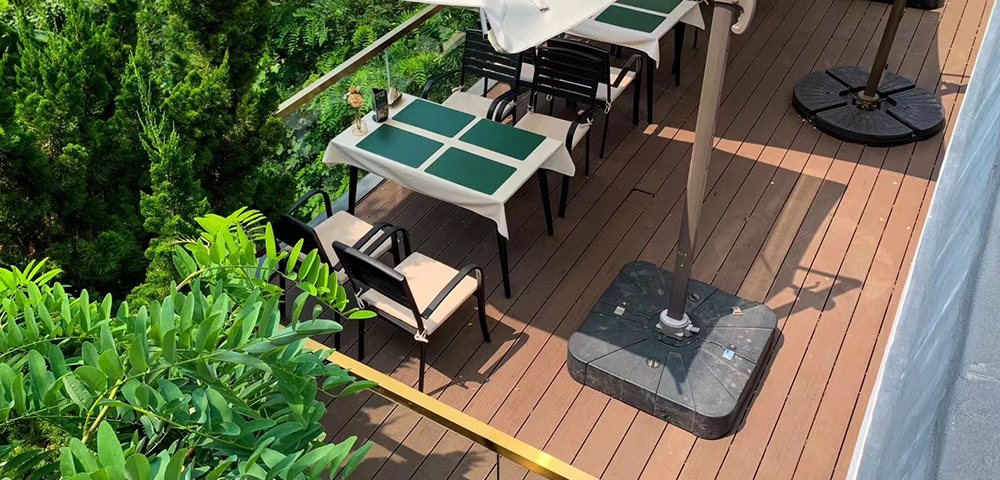
You can see recycled plastic decking in many outdoor places. People use it for patios, pool decks, and garden paths. Businesses put it in restaurants, malls, and parks because it does not get damaged by water or lots of people walking on it.
Composite decking gives you many benefits. The boards are made from recycled plastic and wood fibers. This makes them strong and tough. The mix helps stop rot, bugs, and water damage. You do not need to spend much time on care like with wood.
Here is a table that shows the main types of plastics and where they come from:
Type of Plastic | Typical Source |
|---|---|
High-Density Polyethylene (HDPE) | Soft plastics such as milk bottles and plastic bags |
Polyolefins (HDPE, LDPE, PP) | Commingled waste plastic from municipal recycling programs |
Reclaimed Timber (Hardwoods & Softwoods) | Ground timber flour from reclaimed wood |
Manufacturers try to use as much recycled material as possible. The table below shows how much recycled stuff is in popular brands:
Manufacturer | Recycled Content Percentage |
|---|---|
MoistureShield | 95% |
Trex | Up to 95% |
TimberTech | 60% to 85% |
Recycled plastic decking has some special features. Here is a table that compares it to other decking:
Property | Recycled Plastic Decking | Other Decking Materials |
|---|---|---|
Composition | 100% plastic | Wood, composites |
Recyclability | Fully recyclable | Varies |
Density | Similar to softwoods | Heavier than plastics |
Weight | Lightweight | Heavier |
Durability | High (especially if capped) | Varies |
You can findcomposite decking in many places. Here are some common uses:
Outdoor eating areas at restaurants
Shopping malls and walkways
Docks, hotel decks, and clubhouses
Parks, schools, and play areas
Some recycled plastic decking has special certifications. These show the boards meet strict green rules.
Certification Name | Description |
|---|---|
Global GreenTagCertTM | Shows products are ‘Sustainable Products’ and helps earn credits under GBCA’s Green Star® rating. |
NexTrex certification | Checks if items can be recycled into strong decking, and is free for brands. |
When you choose wood-plastic composite or recycled plastic decking, you help the earth. More people want these products every year. Experts think the global plastic decking market will grow by 7.5% to 10.5% each year until 2030. People want easy-care and green materials for homes and businesses.
Factories use recycled plastic and reclaimed wood fibers. They shred bottles, bags, and wood into small bits. These bits get mixed with special additives. Additives help protect boards from sun and water.
Here is how the process works:
Material Preparation: Workers mix 30% wood flour, 60% recycled plastic, and 10% additives like UV stabilizers.
Mixing and Extrusion: The mix goes into a big mixer. Then it moves into an extruder. The extruder shapes it into long strips.
Cooling and Cutting: The strips cool down. Machines cut them to the right size for decking boards.
Surface Treatment: Boards get treated with UV stabilizers and bonding agents. This helps them last longer outside.
Quality Control: Boards get tested for strength and durability.
Packing and Transportation: Workers pack the boards and get them ready to ship.
Note: Many factories recycle scraps from making boards. They use machines to break down leftovers. These leftovers become new plastic granules for decking.
Factories use advanced machines. WEIMA shredders break down old wood and plastic. WPC Decking Board Machines make smooth deck boards. Some companies use water cooling systems that reuse water and do not waste it.
Machinery/Technology | Description |
|---|---|
WPC Decking Board Machine | Makes strong, easy-care composite decking boards |
WEIMA Shredders | Breaks down old wood and plastic for reuse |
WPC Outdoor Decking Machine | Handles mixing, granulating, co-extruding, and treating surfaces |
The mix of plastic and wood fibers goes through extrusion. This pushes the mix through a mold to make boards. Some factories use co-extrusion. This adds a protective layer that stops fading and stains.
Boards get strength from the mix of wood and plastic. They look like wood but do not rot or get bugs. You can use them for patios, walkways, and pool decks. Boards come in many colors and textures.
Here are the steps for making boards:
Mix plastic and wood powder with additives.
Turn the mix into pellets.
Use co-extrusion to add a new layer for protection.
Treat the surface for a natural look.
Test each board for quality and strength.
Pack the boards for delivery.
Tip: Some brands, like Fiberon, reuse almost all waste. They use green methods and give long warranties. You get strong composite decking boards.
Quality control is very important. Factories test boards for strength and durability. Certification groups do surprise checks and extra tests. This makes sure every batch meets high standards.
Ongoing tests for quality
Surprise checks by certification groups
Extra tests for strength and durability
Choosing recycled plastic decking helps the environment. Companies keep lots of waste out of landfills. They use green methods like water cooling to save resources. You get boards that last for years and need little care.
Callout: Composite decking takes more energy to make than wood decking. Plastic decking uses more fossil fuels, like driving a car 540 miles a year. Treated wood decking uses less, like driving only 38 miles a year.
Composite deckingstands up to rain, sun, and snow. The boards do not soak up water, so they do not rot. Composite decking lasts longer than wood decks. Look at this table:
Decking Type | Average Lifespan |
|---|---|
Composite Decking | At least 15 years |
Traditional Wood Deck | 10 to 15 years |
You will not spend much time or money on care. You only need to clean composite decking sometimes. You do not have to stain or seal it often. Wood decks need more work, like cleaning and staining every few years. Composite decking costs more at first, but you save money later because it is easy to care for.
Composite decking lasts at least 15 years if you take care of it.
Wood decking lasts 10 to 15 years, depending on the type and care.
Composite decking does not fade or warp easily.
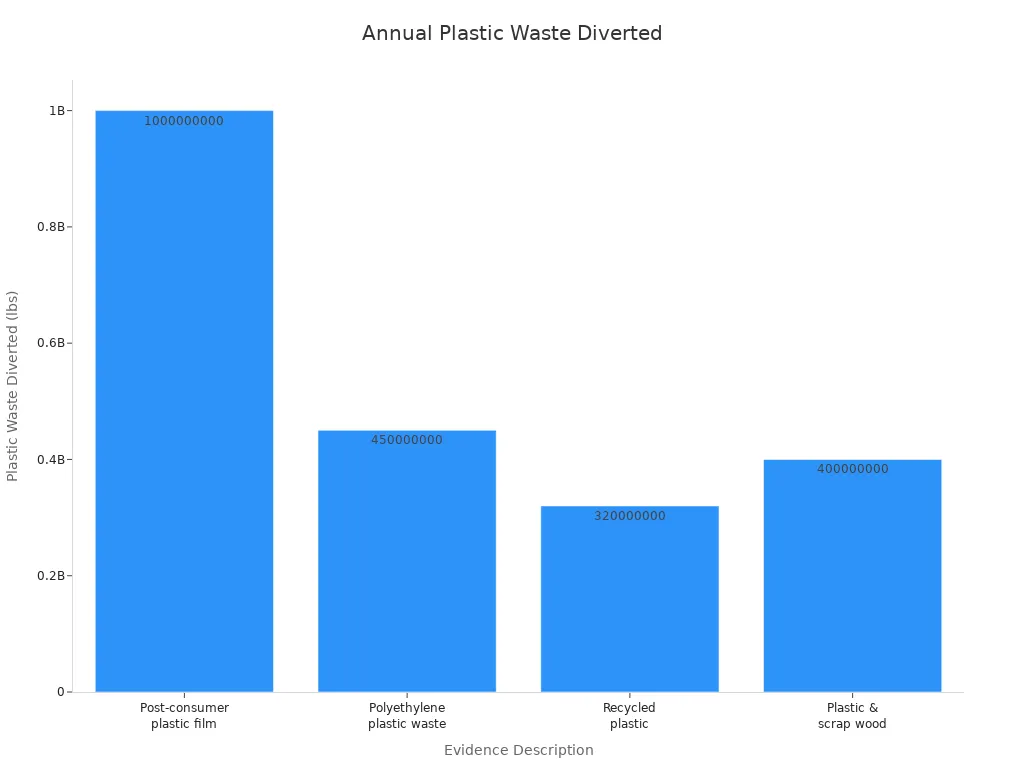
Recycled plastic decking keeps plastic out of landfills. Companies like Trex use lots of recycled plastic every year. Here is a table that shows how much plastic they keep out of landfills:
Evidence Description | Amount of Plastic Waste Diverted |
|---|---|
Trex Company collects post-consumer plastic film for decking | 1 billion pounds |
Trex reclaims polyethylene plastic waste annually | 450 million pounds |
Trex processes recycled plastic annually | 320 million pounds |
Trex diverts plastic and scrap wood from landfills | 400 million pounds |
When you pick recycled plastic decking, you help the earth. Wood decking from good sources can lower carbon in the air. Recycled plastic decking does not lower carbon as much as wood. But it does keep waste out of landfills.
Composite decking has some problems you should know about. Heavy furniture or sharp things can scratch the boards. Mold or mildew may grow in wet places. The surface can be slippery when it is wet, which is not safe. Composite decking gets hotter than wood in the sun.
Can get scratched by heavy furniture or sharp things
Mold and mildew can grow in wet places
Slippery when wet
Easy to stain and scratch
Gets hotter than wood decking
You must install composite decking the right way. If you use the wrong fasteners or space the boards wrong, you can have problems. Always follow local rules to keep your deck safe.
Feature | Composite Decking | Traditional Wood Decking |
|---|---|---|
Durability | Lasts long, resists fading, stains, and mold | Needs regular care to stop rot and decay |
Maintenance | Needs very little care | Needs staining and sealing often |
Structural Integrity | Does not warp, crack, or splinter easily | Can warp, crack, and splinter over time |
Tip: If you want a deck that is easy to care for and strong in bad weather, composite decking is a good pick. If you want a cooler deck and better carbon impact, wood might be better for you.
Composite decking and wood are very different. Composite decking does not get damaged by water or bugs. Wood decking can bend, crack, and get bugs, especially when it is wet outside. You do not need to stain or seal composite decking. Wood needs regular care to stay strong and look nice.
Here is a table that shows how installation is different:
Feature | Composite Decking | Wood Decking |
|---|---|---|
Handling | More challenging due to flexibility | Easier to handle |
Joist Spacing | Closer spacing (typically 12 in) | Wider spacing (often 16 in) |
Fastening Methods | Hidden fasteners for clean look | Face screwing through the board |
Error Management | Errors may require board replacement | Errors can be fixed or disguised |
Composite decking lasts longer than wood. Good boards can last 25 to 30 years. You do not need to do much to keep them nice. Wood decks may need to be replaced after 10 to 15 years if it is wet outside. Composite decking keeps its color and shape better.
You can pick other materials like PVC, aluminum, or bamboo. Each one has good and bad points. PVC decking does not get damaged by water or mold. It costs more and is made from man-made materials. Aluminum decking lasts a long time but uses lots of energy to make. Bamboo decking looks nice and is good for the earth. It needs regular care.
Here is a table that compares popular choices:
Decking Material | Average Cost per Square Foot |
|---|---|
Recycled Plastic Decking | $2.16 - $8.92 |
Cedar Decking | $4.16 - $9.24 |
Bamboo Decking | $6.25 - $10.93 |
Composite Decking | $4 - $9 |
Aluminum Decking | $12 - $15 |
Composite decking uses recycled materials. This helps cut down on waste. It does not need strong chemicals. PVC and aluminum have bigger impacts on nature because of how they are made.
Tip: Composite decking lasts longer than wood. You do not need to replace it as often. This saves energy and materials.
You want to know how much you will pay and how long your deck will last. Composite decking costs more at first. You save money later because you do not need to stain or seal it. Wood decking costs less to buy. You spend more to take care of it.
Here is a table that shows warranty and lifespan:
Material | Warranty Period | Expected Lifespan |
|---|---|---|
Composite Decking | Up to 50 years | 25-30 years |
Wood Decking | N/A | 15-30 years |
PVC Decking | N/A | Longer than wood |
Composite decking gives you a deck that lasts a long time. You do not need to do much to keep it nice. You help the earth by picking recycled materials. Your deck stays strong and looks good for many years.
You will have a tough and earth-friendly deck if you pick recycled plastic decking. The boards use recycled HDPE and wood fibers. Machines shape them so they last in bad weather. You do not need to clean or care for them much.
Works well in rainy places and where many people walk
Needs only a little care
Costs more at the start, but saves money later
Stays safe and keeps looking nice for a long time
Experts say recycled plastic decking is best for homes, hotels, and factories where you need strong and safe decks.
You can sweep the boards with a broom. Use mild soap and water for deeper cleaning. Rinse with a garden hose. Avoid harsh chemicals. You do not need to sand or stain the surface.
Tip: Clean spills quickly to prevent stains.
Yes, recycled plastic decking can feel warm on sunny days. You can choose lighter colors to reduce heat. Place outdoor rugs or shade structures for extra comfort.
You get a smooth surface with no splinters. The boards resist mold and insects. Most brands use non-toxic materials. Your pets and kids can play safely on the deck.
Manufacturers do not recommend painting or staining these boards. The surface does not hold paint well. You can choose from many colors and finishes when you buy the boards.
You can expect your deck to last 25 to 30 years. The boards resist rot, fading, and insects. You do not need to replace them often. Most brands offer long warranties for extra peace of mind.

 English